In-depth Analysis: Why This Integrated Power Distribution System Is the "Heart" of Greenhouse Farming?
Jan 13, 2026
Many people engaged in greenhouse farming (whether for fish/shrimp or fruits/vegetables) are most troubled by power distribution issues. Water pumps, fans, and aerators each come with separate electrical boxes and messy wiring. Manual inspections are exhausting, and even a slight delay in responding to a trip or power outage can lead to huge economic losses.
The core logic behind our Integrated Power Distribution and Control System for Greenhouse Farming can be summed up in one sentence: integrating scattered processes into an intelligent link to achieve stable production and energy conservation throughout the entire workflow.
Why Do We Adopt the "Six-Cabinet Coordination" Model?
Greenhouse farming is more than just supplying power—it involves six key processes: power supply, water supply, ventilation, water circulation, pressure regulation, and oxygen supplementation. Through the collaboration of six types of functional cabinets, we have transformed operations from reactive maintenance to proactive management and control:
Main Power Distribution Cabinet (Power Source)
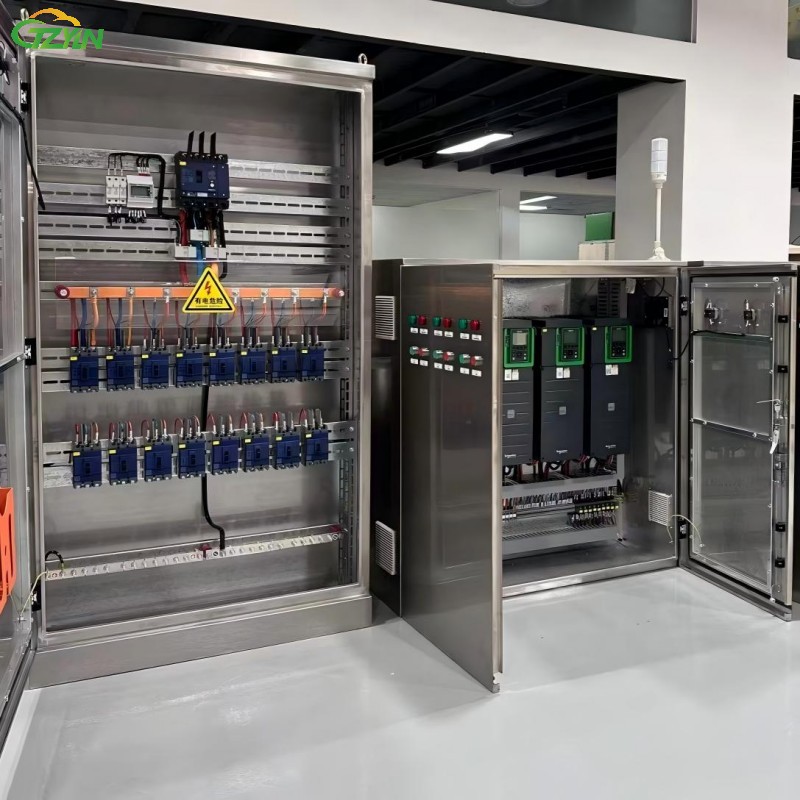
As the central hub of the entire system, it is equipped with over 16 branch circuit protections. This means that if one of your water replenishment pumps malfunctions, only that specific circuit will trip—never causing a power outage across the entire greenhouse.
Water Supply & Pressure Boosting Support
The water replenishment pump control cabinet connects to water level sensors for fully automated, unmanned operation. The booster pump control cabinet uses variable frequency drive (VFD) technology to maintain constant water supply pressure, making it ideal for stable water replenishment in aquaculture scenarios.
Ventilation & Oxygen Supplementation
The exhaust ventilation cabinet automatically switches fans on or off based on temperature and humidity levels. The oxygen supplementation cabinet links to dissolved oxygen sensors to supply oxygen on demand, avoiding power waste caused by excessive operation.
Circulation System VFD Cabinet (Energy-Saving Core)
This is our cost-saving highlight. Equipped with 3 VFDs to adjust the speed of circulation pumps—for example, reducing speed manually or automatically during feeding periods and increasing speed during filtration—cutting energy consumption by 30%–55%.
Actual Photos & Details: Designed for Functionality, Not Just Appearance
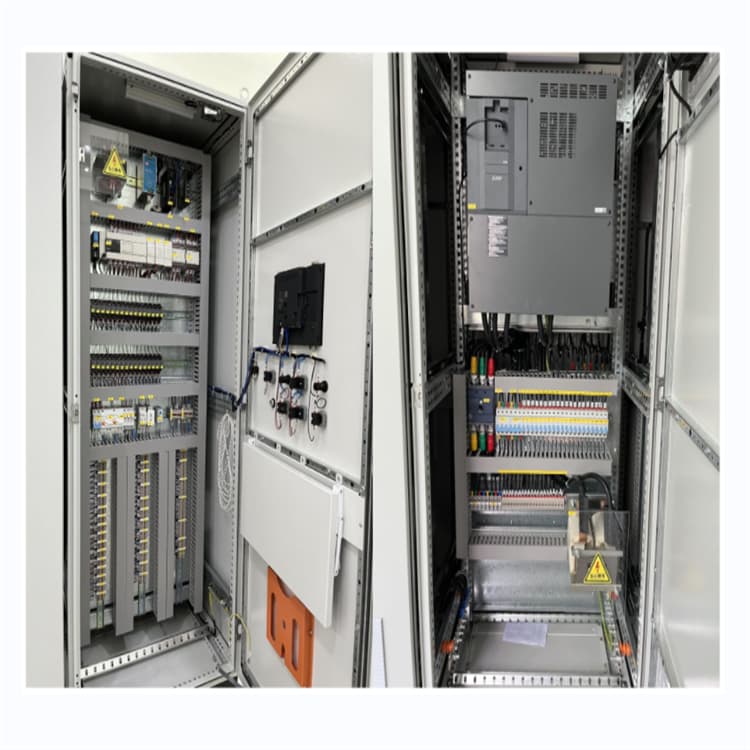
As shown in our factory photos , the system’s professionalism is reflected in every detail:
First-Tier Brand Components
We use internationally renowned components from brands such as Schneider and INVT across the entire product line. In the harsh greenhouse environments characterized by high humidity, dust, and even salt mist, these components ensure the system achieves a continuous operation rate of over 99.5%.
Standardized Wiring Technology
Opening the cabinet door, you will find all wiring is strictly color-coded and organized with terminal blocks. The advantage of this design is clear: even if you are not a professional electrician, you can quickly locate and troubleshoot issues using our user manual, slashing maintenance costs by half.
Industrial-Grade Protection
Constructed with anti-corrosive stainless steel cabinets, it is equipped with emergency stop buttons and fault alarm lights, providing hardware-level protection for your farming assets.
What Benefits Can This System Bring to You?
This is not just an equipment investment—it is an efficiency revolution. According to data from our numerous implemented greenhouse projects:
Farming Survival Rate: Increased by 12%–18% stably
Labor Costs: Reduced by 80% in inspection workload
Electricity Bills: Cut comprehensive energy consumption by 30%–55%
Equipment Lifespan: Extended by over 100% thanks to branch circuit protection and VFD soft-start technology
Flexible Adaptation & Plug-and-Play Operation
The system’s greatest advantage is its versatility. No additional debugging is required whether you are farming shrimp, growing vegetables, or raising seedlings. It supports customized voltages (220V/380V) and circuit expansion (e.g., the oxygenation cabinet can support up to 24 devices). Even if you expand your greenhouse scale in the future, the system can be easily upgraded.
Want to know how this system can be tailored to your greenhouse scale? 📩 Feel free to contact our technical engineers directly—we can provide you with detailed wiring plans and quotes.